State of the Art Image Segmentation With Machine Learning
Image segmentation is a prime domain of figurer vision backed by a huge amount of inquiry involving both paradigm processing-based algorithms and learning-based techniques.
In conjunction with being ane of the most important domains in computer vision, Epitome Segmentation is as well one of the oldest problem statements researchers pondered upon, with get-go works involving archaic region growing techniques and optimization approaches adult equally early on as 1970-72.
Afterwards reading this article, yous'll sympathise the following:
- What is Image Division?
- Notation for Image Segmentation
- Types of Image Segmentation tasks
- Traditional Image Partitioning techniques
- Deep Learning-based Paradigm Partition
- Image Segmentation applications
Set? Let'south leap correct into information technology.
What is Image Sectionalization?
Image sectionalization is a sub-domain of calculator vision and digital image processing which aims at grouping similar regions or segments of an image under their corresponding form labels.
Since the entire process is digital, a representation of the analog epitome in the form of pixels is bachelor, making the job of forming segments equivalent to that of grouping pixels.
Paradigm segmentation is an extension of image nomenclature where, in addition to nomenclature, we perform localization. Paradigm segmentation thus is a superset of prototype classification with the model pinpointing where a respective object is present by outlining the object'south boundary.

💡 Pro tip: Cheque out Image Classification Explained: An Introduction.
In computer vision, nearly image segmentation models consist of an encoder-decoder network as compared to a single encoder network in classifiers.
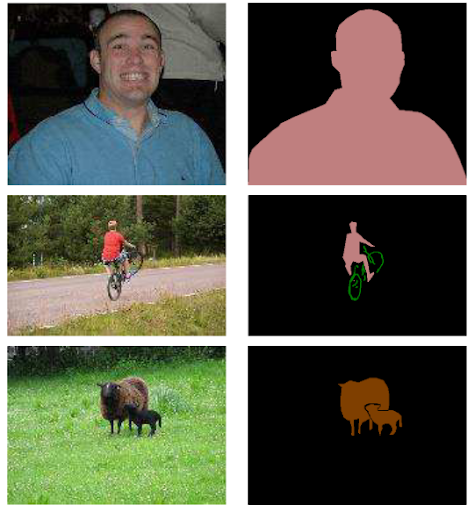
The encoder encodes a latent infinite representation of the input which the decoder decodes to form segment maps, or in other words maps outlining each object'southward location in the prototype.
A typical segment map looks something similar this:
💡 Pro tip: Read An Introduction to Autoencoders to acquire more about the encoder-decoder network.
Annotation for Epitome Segmentation
Like all supervised deep learning algorithms, supervised sectionalization procedures crave large-calibration annotated data for training.
The type of annotations required varies according to the type of segmentation performed past the model, ranging from very specific annotations required in panoptic segmentation tasks to very simple annotations required in semantic division tasks.
Annotations for segmentation tasks can be performed easily and precisely by making use of V7 annotation tools, specifically the polygon annotation tool and the auto-annotate tool.
Polygon Note: Polygon annotation allows us to annotate segment masks (maps) by setting upwards waypoints throughout the boundaries of objects the model has to segment.
These boundaries assist usa to form a polygonal region that nosotros can treat as the segment map for a particular object. This form of annotation, however, lacks precision and can be done where the objects are mostly polygonal, or loftier precision is not of the utmost need.
Auto-annotate: V7's motorcar-annotate tool allows us to annotate segment maps very hands by only drawing a bounding box around the target object. The auto-comment tool, itself a partition tool, does the balance past creating a probable purlieus region by observing local pixels. The proposed boundary region can then be tweaked to form the exact map of the object.
Auto-annotate can assist create high-precision segment maps very speedily for frail and important use cases like self-driving cars and medical imaging.

The type of note required and the precision needed varies according to model use cases and segmentation maps. Annotated datasets for tasks like semantic segmentation are piece of cake to build while annotations for case and panoptic segmentation are harder every bit they require to consider overlaps between objects.
💡 Pro tip: Ready to railroad train your models? Accept a look at Hateful Average Precision (mAP) Explained: Everything You lot Need to Know.
Similarly, employ cases like medical imaging and autonomous vehicles require significantly college precision annotations for segmentation as compared to other simpler applications.
Hither's how you tin can comment medical data using V7.
💡 Pro tip: Learn more by reading our Data Annotation Tutorial.
Types of Image Segmentation tasks
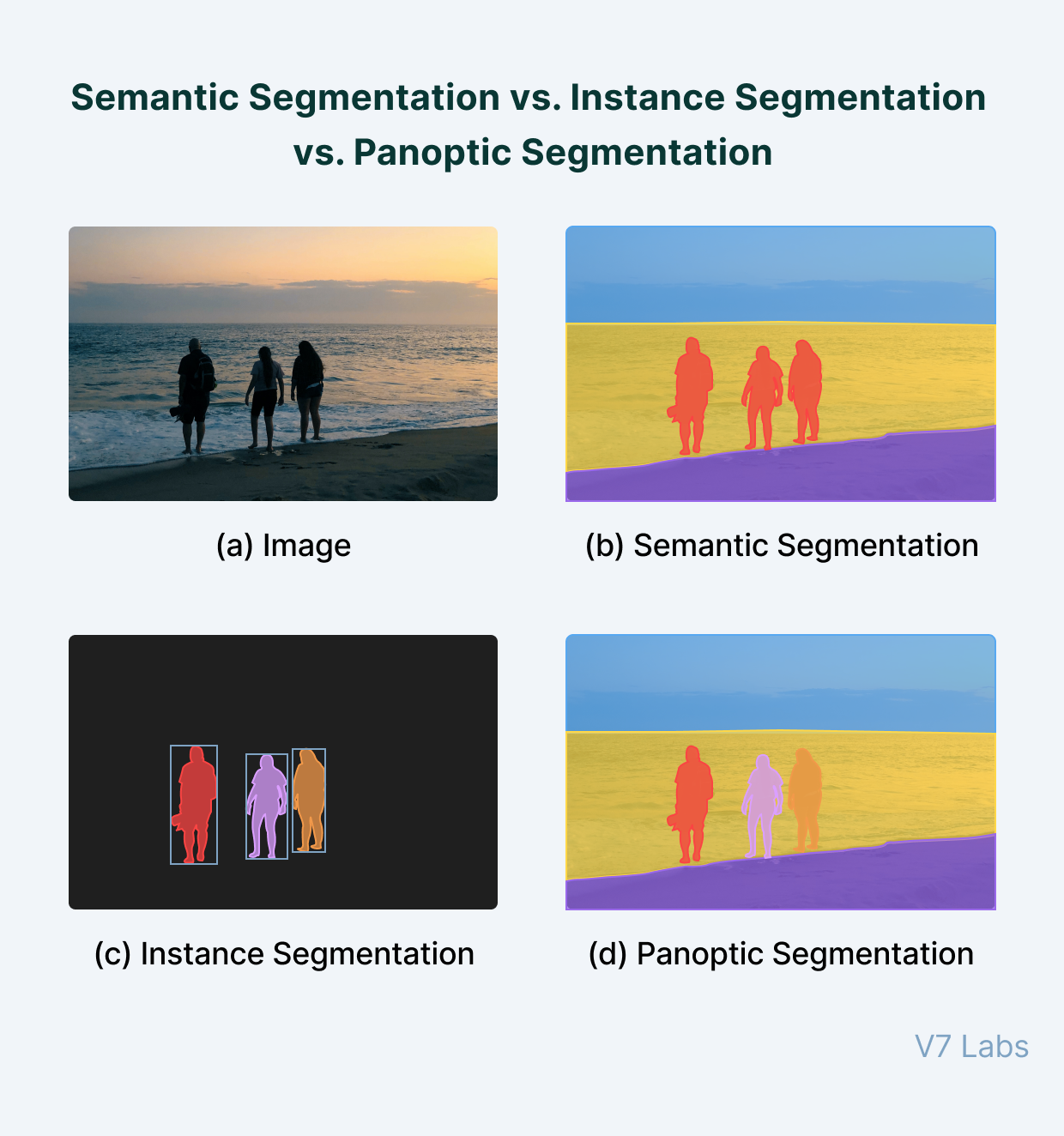
Image segmentation tasks can be classified into 3 groups based on the amount and type of data they convey.
While semantic sectionalization segments out a broad boundary of objects belonging to a particular class, instance sectionalisation provides a segment map for each object it views in the image, without whatever idea of the class the object belongs to.
Panoptic sectionalisation is by far the virtually informative, existence the conjugation of instance and semantic sectionalisation tasks. Panoptic sectionalization gives us the segment maps of all the objects of any particular form nowadays in the paradigm.
Let'south explore these tasks in greater detail.
Semantic segmentation
Semantic segmentation refers to the nomenclature of pixels in an image into semantic classes. Pixels belonging to a particular grade are simply classified to that form with no other information or context taken into consideration.
Every bit might be expected, it is a poorly defined problem statement when there are closely grouped multiple instances of the same class in the image. An image of a crowd in a street would have a semantic sectionalisation model predict the entire crowd region as belonging to the "pedestrian" class, thus providing very little in-depth detail or information on the epitome.
Instance segmentation
Example segmentation models classify pixels into categories on the footing of "instances" rather than classes.
An case segmentation algorithm has no idea of the class a classified region belongs to just tin segregate overlapping or very similar object regions on the basis of their boundaries.
If the same image of a oversupply nosotros talked nearly before is fed to an instance segmentation model, the model would be able to segregate each person from the crowd besides as the surrounding objects (ideally), but would not be able to predict what each region/object is an instance of.
Panoptic partition
Panoptic partition, the almost recently developed segmentation chore, can be expressed as the combination of semantic segmentation and instance segmentation where each instance of an object in the epitome is segregated and the object's identity is predicted.
Panoptic segmentation algorithms find large-scale applicability in popular tasks similar self-driving cars where a huge amount of information about the immediate surround must be captured with the help of a stream of images.
💡 Pro tip: If you are looking for an image annotation tool, check out: 13 Best Image Annotation Tools of 2021 [Reviewed].
Traditional Image Partitioning techniques
Image sectionalisation originally started from Digital Prototype Processing coupled with optimization algorithms. These primitive algorithms made use of methods like region growing and snakes algorithm where they set up initial regions and the algorithm compared pixel values to gain an idea of the segment map.
These methods took a local view of the features in an image and focused on local differences and gradients in pixels.
Algorithms that took a global view of the input image came much later on on with methods like adaptive thresholding, Otsu's algorithm, and clustering algorithms being proposed amidst classical paradigm processing methods.

Thresholding
Thresholding is i of the easiest methods of paradigm segmentation where a threshold is set for dividing pixels into 2 classes. Pixels that take values greater than the threshold value are set up to i while pixels with values lesser than the threshold value are set up to 0.
The image is thus converted into a binary map, resulting in the procedure often termed binarization. Image thresholding is very useful in case the difference in pixel values between the two target classes is very high, and it is easy to choose an boilerplate value as the threshold.
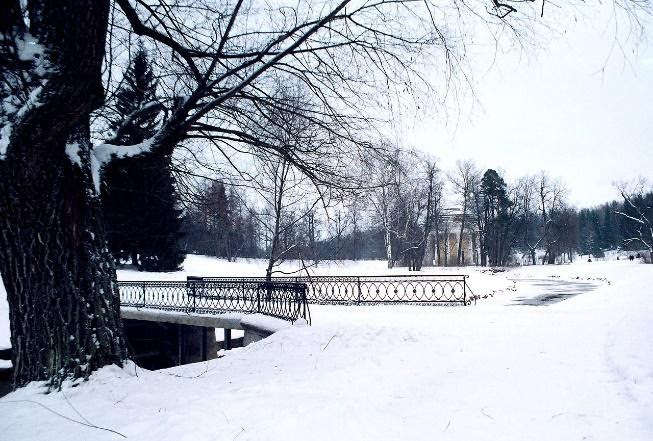
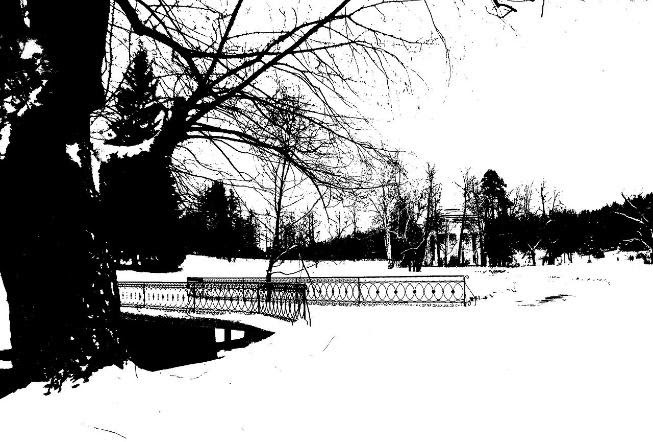
Thresholding is often used for image binarization and then that farther algorithms like contour detection and identification that work just on binary images can be used.
Region-Based Sectionalisation
Region-based partition algorithms work by looking for similarities betwixt adjacent pixels and group them under a common grade.
Typically, the partitioning procedure starts with some pixels ready every bit seed pixels, and the algorithm works by detecting the immediate boundaries of the seed pixels and classifying them as like or dissimilar.
The immediate neighbors are then treated equally seeds and the steps are repeated till the entire image is segmented. An example of a similar algorithm is the popular watershed algorithm for segmentation that works by starting from the local maxima of the euclidean distance map and grows under the constraint that no two seeds tin can exist classified as belonging to the same region or segment map.
Border Segmentation
Border segmentation, also chosen edge detection, is the task of detecting edges in images.
From a segmentation-based viewpoint, nosotros tin say that edge detection corresponds to classifying which pixels in an prototype are border pixels and singling out those edge pixels under a split up form correspondingly.
Edge detection is generally performed by using special filters that give us edges of the epitome upon convolution. These filters are calculated by dedicated algorithms that work on estimating prototype gradients in the x and y coordinates of the spatial plane.
An case of edge detection using the Canny edge detection algorithm, one of the well-nigh popular border detection algorithms is shown below.

Clustering-based Segmentation
Modern sectionalization procedures that depend on image processing techniques generally make use of clustering algorithms for partitioning.
Clustering algorithms perform amend than their counterparts and can provide reasonably good segments in a small corporeality of time. Popular algorithms like the Thou-ways clustering algorithms are unsupervised algorithms that work by clustering pixels with common attributes together as belonging to a particular segment.
K-means clustering, in particular, takes all the pixels into consideration and clusters them into "k" classes. Differing from region-growing methods, clustering-based methods do not need a seed signal to starting time segmenting from.
Deep Learning-based methods
Semantic partitioning models provide segment maps equally outputs corresponding to the inputs they are fed.
These segment maps are frequently n-channeled with northward beingness the number of classes the model is supposed to segment. Each of these northward-channels is binary in nature with object locations being "filled" with ones and empty regions consisting of zeros. The basis truth map is a single aqueduct integer array the same size as the input and has a range of "n", with each segment "filled" with the index value of the corresponding classes (classes are indexed from 0 to n-one).

The model output in an "n-aqueduct" binary format is as well known as a two-dimensional ane-hot encoded representation of the predictions.
Neural networks that perform sectionalization typically use an encoder-decoder construction where the encoder is followed by a bottleneck and a decoder or upsampling layers direct from the bottleneck (similar in the FCN).
Convolutional Encoder-Decoder Architecture
Encoder decoder architectures for semantic sectionalisation became popular with the onset of works like SegNet (by Badrinarayanan et. a.) in 2015.
SegNet proposes the use of a combination of convolutional and downsampling blocks to squeeze information into a bottleneck and class a representation of the input. The decoder then reconstructs input information to form a segment map highlighting regions on the input and grouping them under their classes.
Finally, the decoder has a sigmoid activation at the finish that squeezes the output in the range (0,1).
💡 Pro tip: Check out 12 Types of Neural Networks Activation Functions to learn more about activation functions.

SegNet was accompanied past the release of another independent segmentation work at the same time, U-Net ( by Ronnerberger et. al.), which first introduced skip connections in Deep Learning equally a solution for the loss of information observed in downsampling layers of typical encoder-decoder networks.
Skip connections are connections that go from the encoder straight to the decoder without passing through the bottleneck.
In other words, characteristic maps at various levels of encoded representations are captured and concatenated to feature maps in the decoder. This helps to reduce information loss by aggressive pooling and downsampling as done in the encoder blocks of an encoder-decoder compages.
Skip Connections were a big hit, specifically in the domain of medical imaging, with U-Cyberspace providing state-of-the-fine art results in cell segmentation for the diagnosis of diseases.

Post-obit UNet, DeepLab by Facebook served as a milestone, providing state-of-the-art results on semantic partitioning.
DeepLab made use of atrous convolutions replacing simple pooling operations and preventing significant information loss while downsampling. They further introduced multi-scale feature extraction with the assistance of Atrous Spatial Pyramid Pooling to help the network segment objects regardless of their sizes.
To recover boundary information, i of the most important parts of semantic as well as example segmentation, they made use of fully continued Conditional Random Fields (CRFs).
Coupling the fine-grained localization accuracy of CRFs, the recognition capacity of CNNs led DeepLab to provide highly accurate segment maps, chirapsia methods like FCNs and SegNet by a wide margin.
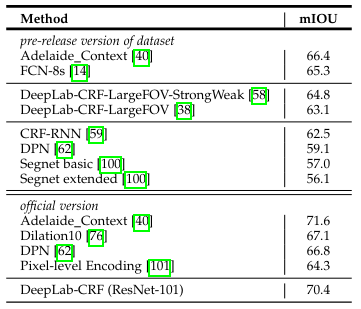
Papers like SegNet, U-Cyberspace, and DeepLab laid the groundwork for futurity piece of work like Mask-RCNN, the DeepLab series past Facebook, and works like PspNet and GSCNN.
💡 Pro tip: Need a recap of Neural Networks? Cheque out The Essential Guide to Neural Network Architectures.
Applications of Epitome Segmentation
Image sectionalisation is an important stride in artificial vision. Machines demand to divide visual data into segments for segment-specific processing to accept place.
Image segmentation thus finds its way in prominent fields similar Robotics, Medical Imaging, Autonomous Vehicles, and Intelligent Video Analytics.
Autonomously from these applications, Image partitioning is also used by satellites on aerial imagery for segmenting out roads, buildings, and trees.
Here are a few of the most popular real-world use cases of prototype segmentation.
Robotics (Machine Vision)
Image segmentation aids machine perception and locomotion by pointing out objects in their path of movement, enabling them to change paths effectively and empathize the context of their environment.
Apart from locomotion, segmentation of images helps machines segregate the objects they are working with and enables them to collaborate with real-world objects using simply vision as a reference. This allows the machine to exist useful almost anywhere without much constraint.
- Instance sectionalisation for robotic grasping
- Recycling object picking
- Autonomous navigation and SLAM
Medical imaging
Medical Imaging is an important domain of estimator vision that focuses on the diagnosis of diseases from visual information, both in the form of unproblematic visual data and biomedical scans.
Sectionalisation forms an important role in medical imaging as it helps doctors place possible cancerous features in images in a fast and accurate manner.
Using prototype division, diagnosis of diseases can not but be speeded up just can also exist made cheaper, thereby benefiting thousands beyond the globe.
- 10-Ray sectionalization
- CT scan organ segmentation
- Dental instance segmentation
- Digital pathology prison cell partitioning
- Surgical video annotation
💡 Pro tip: Bank check out 21+ All-time Healthcare Datasets for Calculator Vision to discover quality medical datasets.
Smart Cities
Smart Cities ofttimes have CCTV cameras for real-time monitoring of pedestrians, traffic, and crime. This monitoring can be hands automated with the help of image segmentation.
With AI-based monitoring, crimes tin be reported faster, road accidents can be followed upwards with firsthand ambulances, and speeding cars can be easily caught and penalized.
The employ of image segmentation and AI-based monitoring can thus amend the lifestyle of people.
- Pedestrian detection
- Traffic analytics
- License plate detection
- Video Surveillance
Self Driving Cars
Self Driving cars are one of the biggest applications of prototype segmentation with the planning of routes and motion depending heavily on information technology.
Semantic and instance segmentation helps these vehicles to identify road patterns and other vehicles, thereby enabling a hassle-free and smooth ride.
- Drivable surface semantic segmentation
- Automobile and pedestrian example partitioning
- In-vehicle object detection (stuff left backside by passengers)
- Pothole detection and segmentation
💡 Pro tip: Bank check out 27+ Almost Popular Computer Vision Applications and Apply Cases in 2021.
Source: https://www.v7labs.com/blog/image-segmentation-guide
0 Response to "State of the Art Image Segmentation With Machine Learning"
Post a Comment